
Microsoft Stock and the AMD AI Partnership: Why Diversifying Beyond Nvidia Matters

 Prefer us on Google


Microsoft stock has been penalized throughout 2026 for a capital expenditure trajectory that the market views as growing faster than the AI revenue it is building for. Microsoft stock's compressed forward multiple reflects investor uncertainty about whether the extraordinary infrastructure spending required to power Azure's AI services will produce returns on a timeline that justifies the near-term free cash flow compression. The AMD partnership that Microsoft expanded this week addresses that concern from an angle that the MAI model development story addressed from the software side: if Microsoft can deliver the same Azure AI capability at lower infrastructure cost by using AMD's Helios GPUs alongside Nvidia's products, the capex required per unit of AI compute delivered decreases, which improves the free cash flow trajectory that the market has been pricing as the primary risk to Microsoft stock.
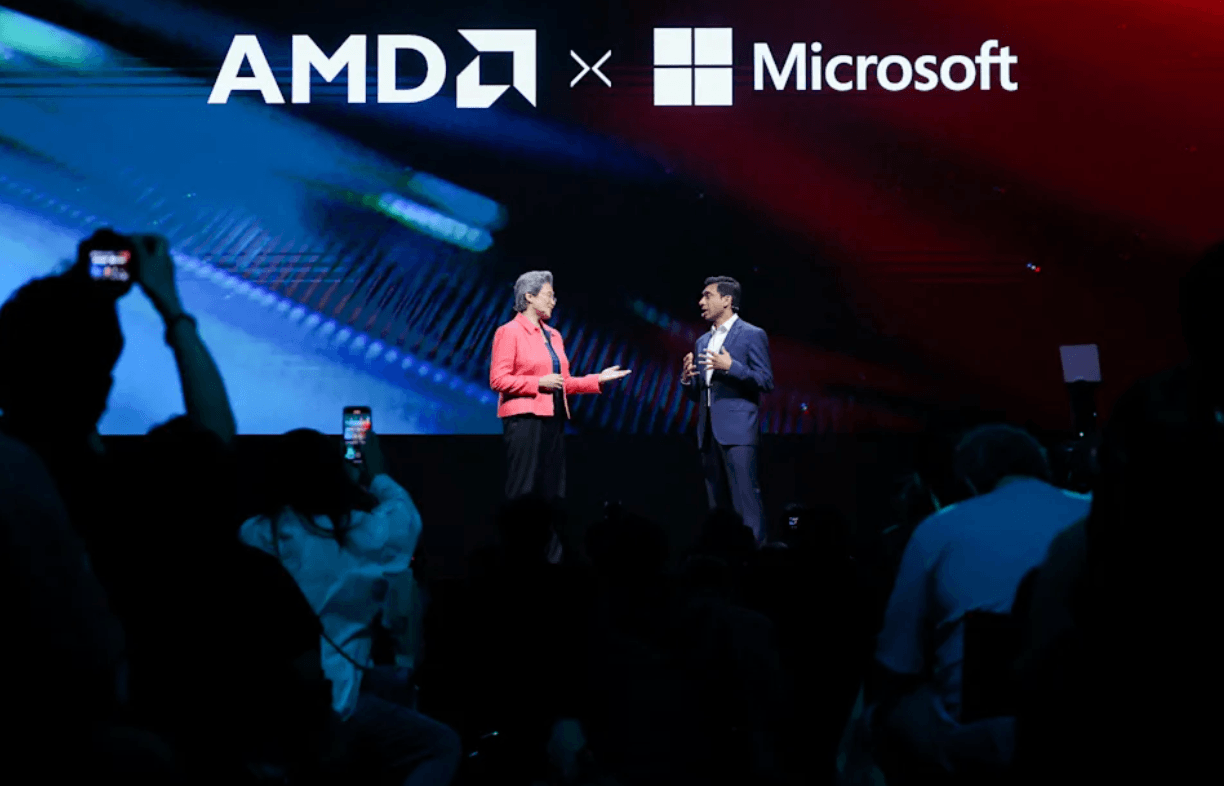
What the AMD Partnership Actually Is
The Microsoft AMD AI infrastructure partnership expansion is not a replacement of Nvidia. It is the construction of a multi vendor AI compute strategy that reduces Microsoft's dependence on a single supplier for the infrastructure that Azure's AI services run on.
AMD's Helios GPU platform has demonstrated competitive performance on specific AI workloads, particularly inference workloads where the mathematical operations per second requirements are different from the training workloads where Nvidia's CUDA ecosystem advantage is most pronounced. For training the frontier AI models that Microsoft uses for Copilot and Azure OpenAI Services, Nvidia's H100 and Blackwell architectures remain the standard that no competitor has yet matched at scale. For inference, running the AI models that have already been trained to serve user queries, AMD's infrastructure has been closing the performance gap while offering pricing that reflects the competitive pressure Nvidia is beginning to face from AMD, Google's TPUs, and Amazon's Trainium chips.
Microsoft's decision to expand AMD's role in Azure's AI infrastructure is therefore primarily an inference story. The training workloads that require the most capable hardware continue running on Nvidia. The inference workloads that represent the majority of AI compute by volume as the application layer matures are where AMD's more competitive pricing creates meaningful cost reduction at Microsoft's deployment scale.
Why This Matters More for Microsoft Than for Most Companies
The scale at which Microsoft deploys AI infrastructure makes the cost difference between Nvidia and AMD pricing more financially material than it would be for a smaller cloud provider or enterprise customer.
Microsoft has guided capital expenditure between approximately $80 billion and $146 billion for fiscal 2026. At that spending level, every percentage point reduction in the average cost per unit of AI compute translates into hundreds of millions of dollars in annual savings. If AMD's Helios GPUs cost meaningfully less than equivalent Nvidia products for comparable inference performance, routing a meaningful percentage of inference workloads to AMD infrastructure reduces the total capital required to deliver the same Azure AI capacity.
The specific financial mechanism through which the AMD partnership improves Microsoft stock's investment case is the free cash flow trajectory that the current capex guidance has been compressing. Investors who are concerned about Microsoft's capex growing faster than revenue are essentially concerned that the cost of building AI infrastructure exceeds the return from deploying it. Any development that reduces the cost of the infrastructure without reducing the capability it delivers improves that cost to return relationship and makes the capex trajectory less alarming on a unit economics basis.
The AMD partnership is exactly that kind of development. It does not reduce Microsoft's ambition for Azure AI capacity. It potentially reduces the cost of achieving that capacity by introducing price competition into a supply relationship that was previously dominated by a single vendor.
The Nvidia Relationship That Is Not Being Abandoned
Understanding what the AMD partnership changes about Microsoft stock's infrastructure economics requires equal clarity about what it does not change.
Microsoft's relationship with Nvidia is not being unwound. The $145 billion supply commitment that Nvidia has secured represents committed production capacity that Microsoft is acquiring for training workloads and for the most demanding inference applications where Nvidia's performance advantage over AMD remains meaningful. The training of frontier AI models, specifically the OpenAI models that run on Azure through the Microsoft OpenAI partnership, requires Nvidia's most advanced architectures at a scale that AMD cannot yet match.
The AMD partnership adds a second vendor for a specific and growing subset of Microsoft's AI infrastructure requirements rather than replacing the primary vendor for the full range of requirements. This is the same multi-vendor strategy that every sophisticated technology infrastructure manager implements once any single vendor relationship becomes large enough to create concentration risk.
For Microsoft stock investors, the specific implication is that the AMD partnership reduces concentration risk in the supply chain rather than signaling a bet that AMD will outperform Nvidia technically. A Microsoft that can source AI infrastructure from multiple vendors has more negotiating leverage with each vendor, more protection against supply disruption from any single supplier, and more flexibility to route workloads to the most cost effective option as the competitive dynamics between vendors evolve.
What This Means for Azure Margins Specifically
The Azure margin trajectory is where the AMD partnership has the most direct and measurable potential impact on Microsoft stock's financial performance.
Azure's gross margin reflects the difference between the revenue Microsoft earns from Azure customers and the cost of delivering Azure services, which includes the infrastructure cost of the compute, storage, and networking that Azure runs on. When infrastructure costs decline for a given level of Azure capability, Azure gross margins improve even if Azure revenue stays constant.
The specific improvement that the AMD partnership creates in Azure margins is not immediate because infrastructure deployment takes time and the current quarter's costs reflect capacity purchased in prior periods. The partnership's impact on Azure margins will appear gradually over multiple quarters as AMD-sourced infrastructure is deployed at scale and as the cost structure of Azure's inference capacity shifts toward the more competitive AMD pricing tier.
For the July 29 earnings report, the AMD partnership will not appear directly in Azure margins because the deployment timeline means the cost benefit has not yet been fully realized in reported financials. What it may appear in is management commentary about the trajectory of Azure infrastructure costs and whether the capex guidance range can be narrowed or reduced as AMD provides an additional capacity source at lower unit cost.
The Google and Amazon Context That Makes the AMD Move Timely
Microsoft's AMD partnership does not exist in isolation. It is a response to a competitive dynamic that Google and Amazon have been executing on for longer and that Microsoft has been slower to implement.
Google has been developing its own Tensor Processing Units for years and has expanded TPU availability to external cloud customers as an alternative to Nvidia GPU infrastructure. Amazon has developed Trainium and Inferentia chips that serve inference workloads at costs below Nvidia GPU infrastructure for compatible workloads. Both Google and Amazon have multi-vendor or proprietary silicon strategies that reduce their dependence on Nvidia pricing for the inference workloads that represent the majority of AI compute volume.
Microsoft's expanded AMD partnership is a catch-up move that brings Azure's infrastructure strategy closer to the multi-vendor approach that its primary cloud competitors have been executing. The timing of the partnership announcement relative to the July 29 earnings report suggests Microsoft management wanted to establish the AMD narrative before the earnings call so that the capex discussion on July 29 can be framed around a cost reduction trajectory rather than around a continuing escalation of Nvidia-dependent infrastructure spending.
What the Partnership Signals About July 29 Management Commentary
One of the most practically useful ways to think about the AMD partnership for investors watching the July 29 earnings call is as a setup for specific management commentary about the capex trajectory that would not be credible without the AMD partnership as a foundation.
CFO Amy Hood's commentary on fiscal 2027 capex guidance is the July 29 disclosure that will most directly affect Microsoft stock's direction in the sessions following the report. If Hood indicates that the AMD partnership and other infrastructure cost reduction initiatives create the conditions for capex growth to moderate in fiscal 2027 relative to fiscal 2026's extraordinary pace, the free cash flow trajectory that has been the primary concern for Microsoft stock investors begins to look more favorable.
The AMD partnership gives Hood a specific and credible mechanism to cite when discussing capex trajectory rather than simply asserting that spending will moderate. A CFO who can say the company is deploying AMD infrastructure at meaningful scale at lower unit cost than Nvidia-only infrastructure has a substantive basis for capex guidance that the market can evaluate rather than simply projecting the current trajectory forward.
For Microsoft stock investors, the AMD partnership is therefore most useful not as a standalone development but as the context that makes July 29's capex commentary more informative and potentially more positive than it would have been without the partnership in place.
The Long-Term Competitive Moat Argument
Beyond the near-term capex trajectory and margin improvement arguments, the AMD partnership has a longer-term implication for Microsoft stock's competitive position that deserves acknowledgment.
AI infrastructure cost leadership is becoming a structural competitive advantage in cloud computing in ways that were not true before the AI workload era. A cloud provider that can deliver equivalent AI performance at lower infrastructure cost has pricing flexibility that a higher-cost provider does not. If Microsoft's AMD partnership reduces its per-unit AI compute cost meaningfully below what it would be in an all-Nvidia infrastructure environment, Azure's ability to price AI services competitively while maintaining margins improves relative to cloud competitors who have not yet secured equivalent cost reduction.
The specific competitive threat that this argument addresses is the concern that Google Cloud's 63% growth rate and Amazon Web Services' continued scale advantage will eventually erode Azure's position in the AI workload category that the current Microsoft stock premium depends on. Multi-vendor infrastructure that reduces Azure's cost structure is one specific mechanism through which Microsoft can sustain competitive pricing that protects market share even as Google and Amazon invest aggressively in their own AI infrastructure.
For those looking to participate in global financial markets, having access to the right trading platform matters. WEEX offers crypto and stock trading products, covering major global markets including US stocks and digital assets.
Conclusion
Microsoft stock's AMD AI partnership expansion is most accurately understood as a cost structure improvement that addresses the primary concern driving the 18% year to date decline from the infrastructure spend side rather than from the revenue side.
The MAI model development addresses Azure's AI cost structure from the software layer by replacing expensive OpenAI inference with cheaper proprietary models. The AMD partnership addresses the same cost structure from the hardware layer by introducing a more competitive alternative to Nvidia-only infrastructure for inference workloads. Together they represent a two-sided approach to improving the unit economics of Azure's AI business that neither announcement alone fully captures.
July 29 is where the financial impact of both initiatives first has an opportunity to appear in management commentary, if not yet in reported financial statements. Amy Hood's capex trajectory discussion on July 29 will either confirm that these cost reduction initiatives are changing the trajectory or reveal that the infrastructure spending momentum is too strong for near-term measures to meaningfully redirect. Microsoft stock's direction after July 29 will depend significantly on which of those two narratives the commentary supports.
FAQ
1. What is Microsoft's AMD AI partnership and what does it mean for Microsoft stock?
Microsoft expanded its AI infrastructure partnership with AMD to diversify beyond exclusive Nvidia reliance for AI compute, particularly for inference workloads where AMD's Helios GPUs offer competitive performance at lower pricing than Nvidia equivalents. For Microsoft stock, the partnership improves the unit economics of Azure's AI infrastructure by introducing price competition into a previously single-vendor supply relationship, which creates a potential improvement in Azure margins and in the capex trajectory that has been the primary concern driving the 18% year-to-date decline.
2. Does the AMD partnership mean Microsoft is replacing Nvidia?
No. Microsoft's $145 billion Nvidia supply commitment remains intact for training workloads and for demanding inference applications where Nvidia's CUDA ecosystem advantage is most pronounced. The AMD partnership adds a second vendor for specific inference workloads where AMD offers competitive performance at lower cost, reducing concentration risk and introducing pricing leverage rather than replacing the primary AI infrastructure supplier.
3. How does the AMD partnership affect Azure margins?
Azure gross margins improve when infrastructure costs decline for a given level of Azure capability. AMD's more competitive pricing for inference workloads reduces the cost of delivering Azure AI services as AMD-sourced infrastructure is deployed at scale. The impact appears gradually over multiple quarters rather than immediately in the July 29 report, but management commentary on July 29 about the capex trajectory may reflect the AMD partnership's contribution to cost reduction.
4. Why did Microsoft announce the AMD partnership before July 29 earnings?
The timing suggests Microsoft management wanted the AMD cost reduction narrative established before the July 29 capex discussion so that CFO Amy Hood's fiscal 2027 capex commentary can be framed around a trajectory that is changing rather than simply continuing. The AMD partnership gives Hood a specific and credible mechanism for discussing infrastructure cost moderation that would not be available without the partnership in place.
5. How does Microsoft's AMD strategy compare to Google and Amazon?
Google has been developing proprietary TPU chips for years and has expanded their availability to external cloud customers. Amazon has developed Trainium and Inferentia chips for inference workloads at costs below Nvidia GPU infrastructure. Microsoft's AMD partnership is a catch-up move that brings Azure's infrastructure strategy closer to the multi-vendor approach that both primary cloud competitors have been executing, reducing the cost structure gap that had been one of Azure's competitive vulnerabilities.
Disclaimer: This content is provided for general branding and informational purposes only and doesn't constitute financial, investment, legal, or tax advice. Any events, rewards, online events, or related information mentioned herein should not be considered a recommendation, solicitation, or invitation to purchase, sell, trade, or otherwise deal in any crypto assets or to use any services. Crypto assets are highly volatile and may result in loss. WEEX services and online events may not be available in all regions and are subject to applicable laws, regulations, and eligibility requirements. You are responsible for ensuring that your use of WEEX services complies with local laws and for carefully assessing the risks before participating in any crypto-related activities.
You may also like

Is Adobe Stock a Takeover Target? What the 39% Decline From the High Tells Potential Buyers

Is Adobe Stock a Buy After Morgan Stanley Cut Its Target by 34%?
Morgan Stanley Says Micron Stock Selloff Is a Buying Opportunity: Should You Listen?

Micron Stock Has 66% Upside as Open Source AI Models Guzzle Memory: What BofA Actually Said

Microsoft Stock Before July 29 Earnings: What Azure Growth Rate Actually Needs to Show

Oil Price Above $90: What the US-Iran War Means for Your Portfolio Right Now
Mark Cuban Stock Options Philosophy: The Broadcast.com Sale That Made 300 Employees Millionaires

Mark Cuban Stock Options Philosophy: SpaceX vs Blue Origin and Why the Difference Matters

What Is a Duress Wallet Protocol and How Does It Prevent Forced On-Chain Transfers in 2026
Why Did the 2026 World Cup Become the Ultimate Catalyst for Trump's Crypto Empire
United States Water Reserve (USWR): The Contract You're Actually Buying and Whether You Can Sell It

How Did Trump's $TRUMP Meme Coin Offer VIP Access to the 2026 World Cup Final

CRCL Stock: Why Circle Crashed 70% and Where It Goes Next
United States Oil Holdings (USOH): Does This Token Really Own Oil?
USAR Tokenized Stock Explained: How to Trade USA Rare Earth as a Token in 2026
How Trump Used $TRUMP Meme Coin World Cup Tickets to Reverse a 97% Crash in 2026
What else makes Robinhood Chain stand out beyond Meme coins?

Why Was Donald Trump at the 2026 World Cup Final and How Did Fans React
What Is DeXe (DEXE) Crypto and How Does Its DAO Governance Protocol Work in 2026
GOOGL Stock Forecast: Q2 2026 Earnings and AI Growth Outlook
Tesla Stock Forecast After Q2 2026 Earnings: Will TSLA Rally or Pull Back?
Tesla Stock Is Down 17% in 2026: What Q2 Earnings Need to Deliver to Turn the Story Around
What Is Mark Cuban's Stock Options Philosophy? How SpaceX Turned Welders Into Millionaires
SPCX Stock Price and the $25 Billion Short Position: Is a Short Squeeze Coming?
Is SPCX Stock Price a Buy? What Uber, Airbnb and Rivian's IPO Crashes Tell Investors
SPCX Stock Price Hits All Time Low: What Investors Should Do Right Now
How Will the CLARITY Act and Bank-Grade Stablecoin KYC Rules Change Crypto Trading in 2026
Why Is BitMine Buying Millions of Ethereum Tokens and Staking $9 Billion in ETH in 2026
How to Protect Your Bitcoin from Physical Attacks: Lessons From the NYC Crypto Torture Case in 2026
What Is the NYC Crypto Kidnapping Case? The Soho Bitcoin Attack Explained — 2026 Case Analysis
Is Adobe Stock a Takeover Target? What the 39% Decline From the High Tells Potential Buyers
Is Adobe Stock a Buy After Morgan Stanley Cut Its Target by 34%?
Morgan Stanley Says Micron Stock Selloff Is a Buying Opportunity: Should You Listen?
Micron Stock Has 66% Upside as Open Source AI Models Guzzle Memory: What BofA Actually Said
Microsoft Stock Before July 29 Earnings: What Azure Growth Rate Actually Needs to Show
Oil Price Above $90: What the US-Iran War Means for Your Portfolio Right Now
Contents
Popular coins
Latest articles





