
Bid Price: Meaning, Examples, and Crypto Trading Use

 Prefer us on Google


Bid price is the highest price a buyer is currently willing to pay for an asset. In crypto trading, the bid price shows where buy demand is sitting in the order book and what price a seller may receive if they want immediate execution.
That sounds simple, but it matters more than many new traders realize. The bid price affects whether a limit order fills, how much a market sell order may actually receive, and how expensive it can be to trade coins with thin liquidity. If you only watch the last traded price and ignore the bid, ask, and spread, you can misunderstand the real cost of entering or exiting a position.
What Is Bid Price?
The bid price is the price offered by buyers. If BTC/USDT shows a best bid of 65,000 USDT, that means the highest current buy order is willing to buy BTC at 65,000 USDT.
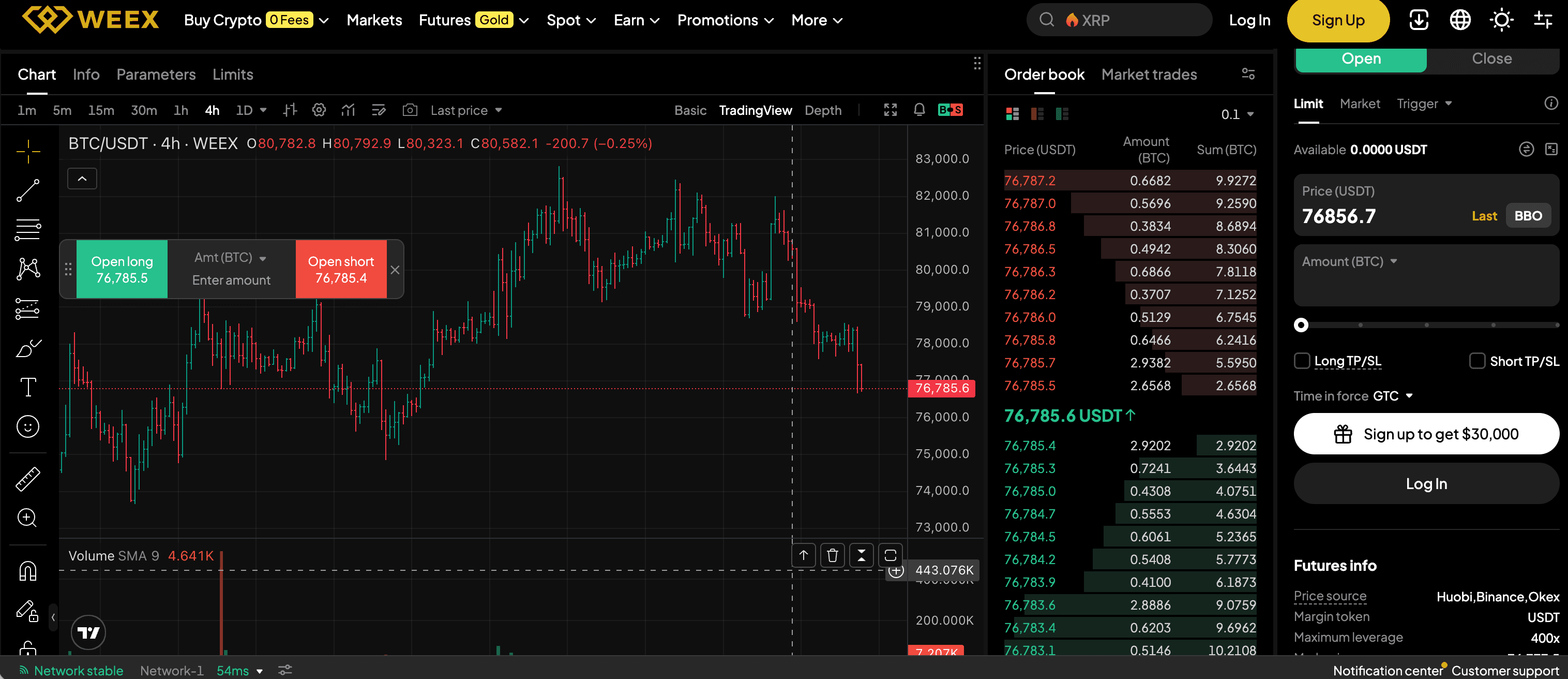
In an exchange order book, bids usually appear on the buy side. The best bid is the highest visible bid. Lower bids sit beneath it at cheaper prices. Sellers who want an instant fill usually sell into the best available bid, while buyers who want to control their entry can place a limit order at their chosen bid price.
| Term | Meaning | Trader impact |
|---|---|---|
| Bid price | Highest price buyers are willing to pay | The price a seller may receive for immediate sale |
| Ask price | Lowest price sellers are willing to accept | The price a buyer may pay for immediate purchase |
| Bid-ask spread | Difference between ask and bid | A real trading cost, especially in thin markets |
| Best bid | Highest buy order in the book | Shows strongest current buy-side quote |
| Best ask | Lowest sell order in the book | Shows cheapest current sell-side quote |
For a deeper exchange-specific reference, WEEX's Bid Price Wiki defines the term in the context of cryptocurrency markets.
Bid Price vs Ask Price
Bid price and ask price are two sides of the same market.
The bid is what buyers are offering. The ask is what sellers are requesting. In normal market conditions, the bid price is lower than the ask price. The gap between them is the bid-ask spread.
For example:
| Market quote | Meaning |
|---|---|
| Best bid: 99.95 USDT | Buyers are willing to buy at 99.95 |
| Best ask: 100.05 USDT | Sellers are willing to sell at 100.05 |
| Spread: 0.10 USDT | Immediate execution costs more than the mid-price suggests |
If you place a market buy order, you generally interact with the ask side. If you place a market sell order, you generally interact with the bid side. This is why the bid price matters so much for exits: it is often closer to the price you can actually sell at right now.
How Bid Price Works In A Crypto Order Book
Crypto exchanges use order books to organize buy and sell orders by price level. Bids represent buy interest. Asks represent sell interest. The matching engine pairs compatible orders when prices cross.
A simplified order book may look like this:
| Side | Price | Quantity |
|---|---|---|
| Ask | 100.20 | 5 ETH |
| Ask | 100.10 | 8 ETH |
| Best ask | 100.05 | 3 ETH |
| Best bid | 99.95 | 4 ETH |
| Bid | 99.80 | 10 ETH |
| Bid | 99.50 | 20 ETH |
If a trader sells 2 ETH at market, the order may fill against the best bid at 99.95. If a trader sells 8 ETH at market, only part may fill at 99.95 before the order moves down to lower bids. That is where slippage appears.
The more important point is that the visible bid price is not always the final execution price for larger orders. A small trade may fill neatly at the best bid. A larger order may consume multiple bid levels and receive a worse average price.
WEEX's Order Book Wiki explains how buy and sell orders are organized by price level.
Why Bid-Ask Spread Matters
The bid-ask spread is one of the most overlooked costs in trading. A tight spread usually points to stronger liquidity and active participation. A wide spread can signal lower liquidity, higher volatility, or weaker agreement between buyers and sellers.
In practice, spread matters because it affects execution before the market even moves. If a token has a bid of 1.00 USDT and an ask of 1.05 USDT, a trader who buys at the ask and immediately sells at the bid is already down roughly 4.76% before fees.
That gap becomes more dangerous in low-volume altcoins, newly listed tokens, meme coins, and stressed markets. The chart may show one price, but the order book may reveal that there is not enough real demand near that level.
How Traders Use Bid Price
Traders use bid price to read demand, plan limit orders, and estimate exit quality.
A spot trader may place a limit buy order near the bid if they want a better entry and are willing to wait. A seller may look at the bid side before exiting to see whether there is enough depth to absorb the order. Market makers watch the relationship between bid and ask because the spread is where much of the quoting opportunity sits.
For beginners, the practical rule is simple: do not treat the last traded price as the only price. Before placing an order, check the bid, ask, spread, and depth. This is especially important when trading smaller tokens or during fast-moving market conditions.
To practice the mechanics in a real trading environment, users can review WEEX's spot trading guide and compare how market and limit orders behave across different trading pairs.
Common Mistakes With Bid Price
The first mistake is assuming the bid price guarantees a full exit. It does not. The best bid only shows the top available buy quote. If there is not enough quantity at that level, the remaining order may fill lower.
The second mistake is placing a market order in a thin book. Market orders prioritize execution, not price. In a shallow market, that can mean selling into several lower bids or buying through several higher asks.
The third mistake is ignoring spread during volatile periods. Spreads can widen quickly when liquidity providers pull quotes or when news shocks the market. A token that looks easy to trade during calm conditions may become expensive to exit when everyone wants out at the same time.
Conclusion
Bid price is more than a glossary term. It is the live signal of what buyers are willing to pay, and it shapes the real price a seller may receive. In crypto markets, understanding bid price helps traders read order books, avoid hidden execution costs, and make better use of limit orders.
Before trading, compare the bid price with the ask price, check the spread, and look at order-book depth. That small habit can prevent avoidable slippage, especially in less liquid markets. For a beginner-friendly path into order types and execution, explore WEEX spot markets and start with small, controlled trades before scaling position size.
FAQ
Is bid price the same as market price?
No. The market price often refers to the last traded price or displayed reference price. The bid price is the highest current price buyers are willing to pay.
Do I sell at the bid price or ask price?
If you use a market sell order, you generally sell into the bid side of the order book. If you place a limit sell order, you can set your own minimum acceptable price, but it may not fill.
Why is the bid price lower than the ask price?
Buyers want to pay less, while sellers want to receive more. The difference between the two is the bid-ask spread.
What does a wide bid-ask spread mean?
A wide spread can indicate lower liquidity, higher uncertainty, or a market where buyers and sellers disagree on fair value. It also means immediate trading may be more expensive.
How can I reduce bid price execution risk?
Use limit orders when price control matters, check order-book depth before trading size, and avoid market orders in illiquid or highly volatile pairs.
Risk Warning
Crypto assets are volatile and may result in partial or total loss. Bid price, ask price, spread, and order-book depth can change quickly, especially in thin markets or during market stress. Market orders may suffer slippage, limit orders may remain unfilled, and platform, liquidity, custody, regulatory, and counterparty risks can affect trading outcomes. This article is for educational purposes only and is not financial advice.
Disclaimer: This content is provided for general branding and informational purposes only and doesn't constitute financial, investment, legal, or tax advice. Any events, rewards, online events, or related information mentioned herein should not be considered a recommendation, solicitation, or invitation to purchase, sell, trade, or otherwise deal in any crypto assets or to use any services. Crypto assets are highly volatile and may result in loss. WEEX services and online events may not be available in all regions and are subject to applicable laws, regulations, and eligibility requirements. You are responsible for ensuring that your use of WEEX services complies with local laws and for carefully assessing the risks before participating in any crypto-related activities.
You may also like

How Will the CLARITY Act and Bank-Grade Stablecoin KYC Rules Change Crypto Trading in 2026
Why Is BitMine Buying Millions of Ethereum Tokens and Staking $9 Billion in ETH in 2026
How to Protect Your Bitcoin from Physical Attacks: Lessons From the NYC Crypto Torture Case in 2026
What Is the NYC Crypto Kidnapping Case? The Soho Bitcoin Attack Explained — 2026 Case Analysis
SpaceX Stock (SPCX): Now Public, and Back Where It Started
USA Rare Earth (USAR): What It Is and How to Trade the Token
NVIDIA Stock in 2026: Real Shares, Tokenized NVDA, and Perpetuals Compared
How to Buy USAR Coin: Buying Tokenized USA Rare Earth Stock the Right Way
WEEX Poker Party Series 4: Draw Cards to Split a $1M USDT Pool

Why Prediction Markets Are So Hard to Regulate: The CFTC vs SEC Debate
Are Prediction Markets Legal? CFTC vs SEC Regulation Explained
Why Is TSMC Stock Down After a 77% Profit Jump? What Wall Street Is Actually Worried About
Is Samsung Stock a Buy at Its Lowest Level Since the AI Boom Began?
Samsung Stock and the KOSPI Bear Market: What the 30% Decline From Peak Tells Investors
Oil Price Above $90: What the US-Iran War Means for Your Portfolio Right Now
Iran War and Bitcoin: Why Crypto Is Not Acting Like a Safe Haven at $90 Oil
KOSPI Stock Market Enters Bear Market: What a 25% Drop From the Peak Means for Investors
KOSPI Stock Bear Market: What It Means for Samsung, SK Hynix and Korean Chip Stocks
Is the KOSPI Stock Market a Buy After Entering Bear Market Territory?
SK Hynix Leveraged ETFs SKHL SKHX SKHZ: What Each One Does and Who Should Use Them
Barclays Sees 70% Upside for SK Hynix Stock: What the Overweight Rating Means
Is SK Hynix Stock a Buy Now? What the 52 Week Low and IPO Price Break Tell Investors
Is This Really Messi's Last World Cup? What the 2026 Final Means for His Legacy
Who Is Ferran Torres? The Substitute Who Won the 2026 World Cup for Spain
2026 FIFA World Cup Winner: Spain Beats Argentina to Claim Second World Title
SK Hynix Stock: SKHY's Wild Nasdaq Debut and What Comes Next
JEPQ Stock in 2026: Price, Monthly Dividend, and Real Risks
FIFA World Cup 2026 Final Winner: Spain Beat Argentina 1-0 in Extra Time
Cathie Wood AMD Stock Sale: Why ARK Keeps Trimming a 140% Winner

Argentina vs Spain World Cup Final 2026: Score and Crypto Fallout
How Will the CLARITY Act and Bank-Grade Stablecoin KYC Rules Change Crypto Trading in 2026
Why Is BitMine Buying Millions of Ethereum Tokens and Staking $9 Billion in ETH in 2026
How to Protect Your Bitcoin from Physical Attacks: Lessons From the NYC Crypto Torture Case in 2026
What Is the NYC Crypto Kidnapping Case? The Soho Bitcoin Attack Explained — 2026 Case Analysis
SpaceX Stock (SPCX): Now Public, and Back Where It Started
USA Rare Earth (USAR): What It Is and How to Trade the Token
Contents
Popular coins
Latest articles



