
Are Prediction Markets Legal? CFTC vs SEC Regulation Explained

 Prefer us on Google


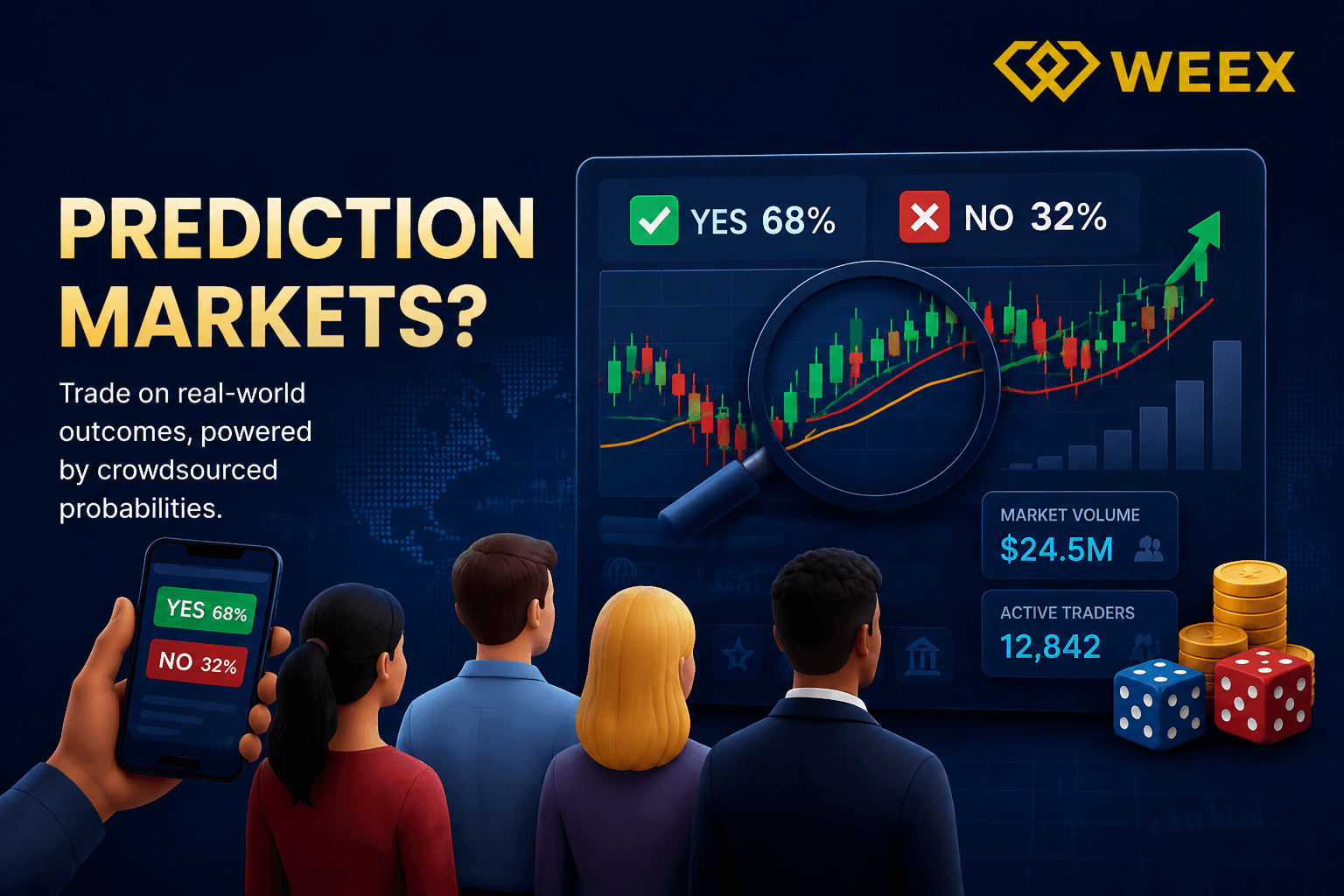
Prediction markets are becoming a growing part of the digital financial landscape, allowing users to trade contracts based on future events. From economic indicators to company events and sports outcomes, these markets let participants buy contracts based on whether an event will happen or not.
However, as platforms such as Polymarket and Kalshi expand, one major question remains: Are prediction markets legal, and who should regulate them?
The current debate in the United States is mainly focused on the regulatory boundary between the Commodity Futures Trading Commission (CFTC) and the Securities and Exchange Commission (SEC). The key issue is not whether prediction markets can exist, but how different types of event contracts should be classified.
What Are Prediction Markets and How Do They Work?
Prediction markets allow users to trade contracts linked to the outcome of future events. These contracts are usually structured as “Yes” or “No” positions.
For example, users may trade contracts based on:
- Whether inflation reaches a certain level;
- Whether a company achieves a specific target;
- Whether a sports team wins a match.
If the final outcome matches the user’s position, the contract generates a payout.
Unlike traditional betting platforms, prediction markets are designed as financial markets where prices represent the collective expectations of participants. However, because the outcome depends on future events, regulators have debated whether these products should be treated as financial derivatives or gambling-like products.
Why Are Prediction Markets Facing Regulatory Challenges?
For years, prediction markets have mainly been associated with the CFTC because many event contracts share characteristics with derivatives.
A typical event contract includes:
- A future event;
- A defined outcome;
- A financial payout.
For example, a contract predicting whether oil prices will exceed a certain level fits naturally within the derivatives framework.
The situation becomes more complicated when the event involves publicly traded companies. A contract related to a company’s financial condition or stock performance may fall under SEC jurisdiction because it could be considered a security-based derivative.
CFTC vs SEC: Who Regulates Prediction Markets?
The regulatory debate centers on the different responsibilities of the two agencies.
| Agency | Main Responsibility | Role in Prediction Markets |
|---|---|---|
| CFTC | Futures, commodities, and derivatives | Main regulator for event contracts |
| SEC | Securities and securities-related products | May regulate contracts linked to company value |
The CFTC has historically overseen event contracts because they are structured similarly to swaps and derivatives.
However, the SEC has authority over “security-based swaps,” a category created under the 2010 Dodd-Frank Act. These products are derivatives linked to securities, such as individual stocks or a company’s financial condition.
Why Does the SEC Have a Role in Prediction Markets?
The main regulatory question is whether an event contract directly affects a company’s financial condition.
Some cases are relatively clear.
For example:
“Will Apple go bankrupt?”
This directly relates to Apple’s financial health and could potentially fall under SEC oversight.
But other cases are less clear:
“Will Apple launch a new iPhone this year?”
“Will Apple’s CEO step down?”
These events may influence investor sentiment and stock prices, but whether they qualify as security-based swaps remains uncertain.
This unclear boundary is one of the biggest challenges facing regulators today.
How Could New Regulations Affect Prediction Markets?
Clear regulation could determine how prediction market platforms develop in the future.
For companies operating platforms such as Polymarket and Kalshi, regulatory changes may affect which contracts they can offer and what compliance requirements they must follow.
A clear framework could improve market confidence and investor protection. However, overlapping rules from multiple regulators could increase compliance costs and make it harder for platforms to operate efficiently.
The challenge for regulators is finding a balance between encouraging financial innovation and preventing market abuse.
Prediction Markets vs Gambling: Why Is the Debate Continuing?
One of the biggest discussions around prediction markets is whether they should be considered financial products or a form of gambling.
Critics argue that users are simply betting on uncertain outcomes. Supporters, however, believe prediction markets provide useful information because prices reflect the collective views of market participants.
In practice, prediction markets combine elements of both speculation and financial trading. This is why regulators are focusing on creating specific rules rather than applying existing gambling regulations directly.
What Should Users Know About Prediction Markets?
Prediction markets can provide insight into how participants view future events, but market prices are not guaranteed predictions.
Users should understand:
- How the contract works;
- What event determines the payout;
- What regulations apply to the platform;
- The risks of market volatility.
As with other financial products, understanding the structure and risks is essential before participating.
Conclusion: Regulation Will Shape the Future of Prediction Markets
Prediction markets are developing into a new category between financial derivatives and event-based trading. The main challenge is defining where these products fit within existing financial regulations.
Currently, the CFTC remains the primary regulator for event contracts, while the SEC may oversee contracts connected to securities and company financial conditions. How these agencies define their roles will have a major impact on the future of platforms like Polymarket and Kalshi.
For users and companies, clearer regulatory rules will be the key factor determining whether prediction markets can continue growing as a recognized financial market.
Disclaimer: This content is provided for general branding and informational purposes only and doesn't constitute financial, investment, legal, or tax advice. Any events, rewards, online events, or related information mentioned herein should not be considered a recommendation, solicitation, or invitation to purchase, sell, trade, or otherwise deal in any crypto assets or to use any services. Crypto assets are highly volatile and may result in loss. WEEX services and online events may not be available in all regions and are subject to applicable laws, regulations, and eligibility requirements. You are responsible for ensuring that your use of WEEX services complies with local laws and for carefully assessing the risks before participating in any crypto-related activities.
You may also like

How Will the CLARITY Act and Bank-Grade Stablecoin KYC Rules Change Crypto Trading in 2026

Why Is BitMine Buying Millions of Ethereum Tokens and Staking $9 Billion in ETH in 2026
How to Protect Your Bitcoin from Physical Attacks: Lessons From the NYC Crypto Torture Case in 2026
What Is the NYC Crypto Kidnapping Case? The Soho Bitcoin Attack Explained — 2026 Case Analysis

SpaceX Stock (SPCX): Now Public, and Back Where It Started

USA Rare Earth (USAR): What It Is and How to Trade the Token
NVIDIA Stock in 2026: Real Shares, Tokenized NVDA, and Perpetuals Compared
How to Buy USAR Coin: Buying Tokenized USA Rare Earth Stock the Right Way
WEEX Poker Party Series 4: Draw Cards to Split a $1M USDT Pool
Who Really Makes Money on Prediction Markets? Smart Money vs Retail Traders
The Hidden Problem With Prediction Markets: Who Pays the Winners?
Prediction Markets Are the Future of Finance or Just Gambling?
How Polymarket and Kalshi Turned Predictions Into a Billion-Dollar Business

Why Prediction Markets Are So Hard to Regulate: The CFTC vs SEC Debate
Why Is TSMC Stock Down After a 77% Profit Jump? What Wall Street Is Actually Worried About
Is Samsung Stock a Buy at Its Lowest Level Since the AI Boom Began?
Samsung Stock and the KOSPI Bear Market: What the 30% Decline From Peak Tells Investors
Oil Price Above $90: What the US-Iran War Means for Your Portfolio Right Now
Iran War and Bitcoin: Why Crypto Is Not Acting Like a Safe Haven at $90 Oil
KOSPI Stock Market Enters Bear Market: What a 25% Drop From the Peak Means for Investors

KOSPI Stock Bear Market: What It Means for Samsung, SK Hynix and Korean Chip Stocks
Is the KOSPI Stock Market a Buy After Entering Bear Market Territory?
SK Hynix Leveraged ETFs SKHL SKHX SKHZ: What Each One Does and Who Should Use Them
Barclays Sees 70% Upside for SK Hynix Stock: What the Overweight Rating Means
Is SK Hynix Stock a Buy Now? What the 52 Week Low and IPO Price Break Tell Investors

Is This Really Messi's Last World Cup? What the 2026 Final Means for His Legacy
Who Is Ferran Torres? The Substitute Who Won the 2026 World Cup for Spain
2026 FIFA World Cup Winner: Spain Beats Argentina to Claim Second World Title
SK Hynix Stock: SKHY's Wild Nasdaq Debut and What Comes Next
JEPQ Stock in 2026: Price, Monthly Dividend, and Real Risks
How Will the CLARITY Act and Bank-Grade Stablecoin KYC Rules Change Crypto Trading in 2026
Why Is BitMine Buying Millions of Ethereum Tokens and Staking $9 Billion in ETH in 2026
How to Protect Your Bitcoin from Physical Attacks: Lessons From the NYC Crypto Torture Case in 2026
What Is the NYC Crypto Kidnapping Case? The Soho Bitcoin Attack Explained — 2026 Case Analysis
SpaceX Stock (SPCX): Now Public, and Back Where It Started
USA Rare Earth (USAR): What It Is and How to Trade the Token
Contents
Popular coins
Latest articles






