Pi Cryptocurrency in Latin America: Everything About Pi Network

Pi crypto has reached the real market. We explain what Pi coin is, its current price, its risks, and why its history connects directly to the financial reality of Venezuela and the entire Latin American region.
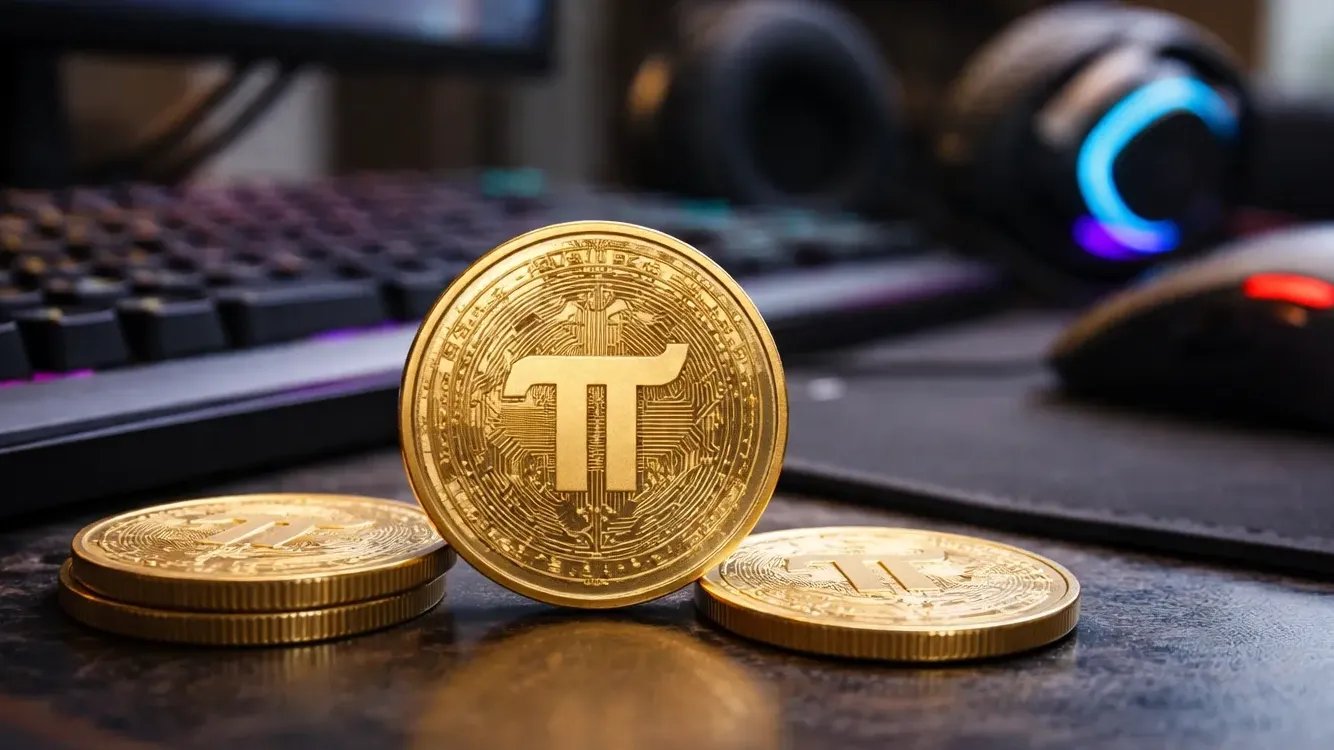
There is a question that repeats in Telegram groups, crypto forums, and coffee shop conversations throughout Latin America: what happened to Pi Network? For years, millions of people in Venezuela, Mexico, Colombia, Peru, and the entire region mined pi crypto from their cell phones, accumulating tokens in the hope that one day they would be worth something real. That day has arrived. But the story, as often happens in the crypto world, turned out to be more complex than the original promise suggested.
In this article, we tell you everything you need to know about pi cryptocurrency: what it is, how much Pi is worth today, what analysts say about its future, and, above all, how it fits (or doesn't fit) into the financial survival strategy of millions of Latin Americans living under the pressure of currencies that are melting away due to constant inflation.
What is Pi Network: the crypto that was born in everyone's pocket
Pi Network was launched in March 2019 by Dr. Nicolas Kokkalis and Dr. Chengdiao Fan, both graduates of Stanford University. The proposal was as simple as it was ambitious: to create a cryptocurrency that anyone could mine using only their cell phone, without draining the battery, without permanent internet, and without specialized hardware or technical knowledge.
The mechanism was straightforward: you downloaded the Pi Network app, opened it once a day to confirm your activity, and the system credited you with tokens. You could increase your mining rate by inviting friends and building circles of trust. This viral dynamic was what triggered adoption: in regions with high smartphone penetration but limited access to the traditional financial system, such as Venezuela or parts of Central America, the proposal of "earning free crypto" resonated with special force.
For years, however, pi coin had no real market price. The tokens could not be transferred or sold externally. The project operated on a closed network, which generated both genuine expectation and skepticism. All that changed on February 20, 2025, when Pi Network officially launched its open mainnet and the token began to be traded on centralized exchanges.
How much Pi is worth today: current price and market data
The market debut was explosive. According to data from CoinMarketCap, the price of PI hit an all-time high of $2.98 on February 26, 2025. For those who had accumulated thousands of tokens during years of free mining, that moment seemed like confirmation that the wait had been worth it.
But the crypto market does not forgive euphoria without solid foundations. In the following months, the price of pi crypto fell steadily. By February 2026, the token recorded an all-time low of $0.1312, before stabilizing. At the time of writing this article, 1 PI is worth approximately $0.17 dollars, with a market capitalization of around $1.7 billion dollars, which places it among the 50 largest cryptocurrencies in the world according to CoinGecko.
Translated into local currencies, that represents approximately:
- Venezuela: around 63 digital bolivars per PI, at the BCV exchange rate.
- Colombia: approximately $700 COP per PI.
- Mexico: about $3.40 MXN per PI.
- Peru: about $0.65 soles per PI.
What do analysts say about the future? Projections vary widely. According to Cryptopolitan, PI could reach a high of $0.57 during 2026 in a moderately optimistic scenario, while CryptoNews points to much higher values in mass adoption scenarios. Honesty requires clarifying that these projections have a huge margin of uncertainty, and any price prediction in crypto should be taken as guidance, not as a guarantee.
Venezuela, inflation, and why the pi cryptocurrency matters in this context
To understand why Pi coin generates so much interest in Latin America, we must talk about money, inflation, and what it means to live in an economy where savings can lose half their value in a few months.
The most extreme case in the region is Venezuela. According to estimates by economics professor Steve Hanke of Johns Hopkins University, annualized inflation in Venezuela during 2025 was in the range of 600% to 650%, remaining the highest in the world. The bolivar has lost more than 70% of its value year-on-year, according to data from the Venezuelan Finance Observatory (OVF), which reported an annual inflation of 229% just as of May 2025.
In that context, the exchange wallet (that is, the tool for converting bolivars to digital assets through crypto platforms) became one of the most used financial survival mechanisms by Venezuelans. According to Chainalysis, between July 2024 and June 2025, Venezuela received flows equivalent to $44.6 billion in cryptocurrencies, the vast majority concentrated in stablecoins, such as USDT, to cover remittances and protect purchasing power.
"Venezuelans began to use cryptocurrencies out of necessity," explained economist Aarón Olmos in statements reported by CoinTelegraph in Spanish. "They face inflation, low wages, currency shortages, and difficulty opening bank accounts."
In that landscape, Pi Network arrived as an accessible promise: a way to accumulate a potentially valuable digital asset without putting a single bolivar at risk. And although the reality of the current price is much more modest than the expectations at launch, the logic of adoption is understandable.
The risks of Pi Network that you cannot ignore
Just because PI has a real price today does not mean it is a risk-free investment. There are structural factors that anyone in the region should know before committing real savings:
The total supply is huge. Pi Network has a maximum supply of 100 billion tokens, of which about 10 billion are currently in circulation. As more users complete the KYC (identity verification, mandatory to move or sell tokens) process, there will be increasing selling pressure on the price.
The application ecosystem is still nascent. Pi's long-term value proposition depends on the development of a robust ecosystem of dApps (decentralized applications) within its network. That process is slow. Without real utility, the token's value remains supported mainly by speculation.
The dependence on exchange listings. During 2025, rumors of listings on large exchanges like Binance generated price spikes that later collapsed when those rumors proved false. That sensitivity to rumors is a sign of fundamentally fragile demand.
The concentration of supply in old wallets. Those who mined for years have large positions. When these "veteran miners" decide to sell, they can generate significant downward pressure.
How to operate with judgment: WEEX as a reliable gateway
If you are thinking about exploring pi coin or any other crypto asset in the region, the choice of exchange is a decision that is not minor. WEEX is a platform that combines institutional security with real access for Latin American users, with a clear proposal: operate with transparency, real liquidity, and without the traps that abound on less rigorous platforms.
Unlike decentralized exchanges where any token can appear without any filter, WEEX applies review processes before enabling assets. For users in Venezuela and the rest of the region, who already have experience navigating complex financial systems, having a reliable backup platform can make the difference between protecting assets and losing them.
In addition, WEEX provides access to the most solid assets on the market: stablecoins, Bitcoin, Ethereum, and other cryptocurrencies with a track record and real liquidity. For those who use the crypto environment mainly as a shield against inflation (which is the reality for the majority in the region), those assets have a concrete and proven utility.
To continue learning about how cryptocurrencies became a tool for survival and financial resistance in Latin America, we recommend these resources from the WEEX Wiki:
- 📖 Cryptocurrencies: Venezuelans and their life jacket in the crisis: A deep analysis of how Venezuelans adopted cryptocurrencies as a survival mechanism in the face of the collapse of the traditional financial system.
- 📖 Geopolitics and Cryptocurrencies: What drives adoption in Latam: A guide to understanding the political, economic, and social factors that are accelerating the use of digital assets throughout Latin America.
Is it worth mining or buying Pi Network in 2026?
The answer depends on your situation:
If you already have accumulated tokens and have completed KYC: you have an asset with real market value. If you mined for years at no cost, any positive price is pure profit. The decision to hold, sell partially, or diversify depends on your risk tolerance and your time horizon.
If you are thinking about buying PI with real savings: the equation is more delicate. At the current price (~$0.17), PI is a high-risk speculative bet. The most optimistic projections are attractive on paper, but the massive supply, the uncertainty of the ecosystem, and the volatility make it an unsuitable asset for someone who is mainly looking to protect the value of their money against inflation.
If you still have the app and mine at no cost: keep going. It costs you nothing, and the potential upside exists, even if it is uncertain.
Conclusion: Pi Network, the most massive crypto promise in the region and its uncomfortable truths
Pi Network achieved something that few crypto projects have: bringing the idea of cryptocurrency to the pockets of tens of millions of people in Latin America and the world, including many who had never had access to formal financial services. That, in itself, is a remarkable achievement. However, the path from "huge community" to "ecosystem with sustained value" remains long and full of real unknowns.
In a region where inflation, devaluation, and institutional instability are daily realities (with Venezuela as an extreme but not unique case), the temptation to bet on a token that "could multiply" is human and understandable. But Latin American crypto history has already left enough lessons: hype without fundamentals always ends the same way. What differentiates investors who come out on top is not having found the right token, but having made informed decisions, diversified with proven assets, and operated on reliable platforms like WEEX. Pi can have its place in a portfolio, but as a limited speculative component, not as a central strategy for financial protection. Get to know the project, follow its development, and if you are going to allocate real capital to it, do so with your eyes open. Register on WEEX today to start your crypto experience on the right foot.
Disclaimer
WEEX and its affiliates provide digital asset exchange services, including contract trading and margin trading, only where it is legal to do so and for eligible users. All content is general information and does not constitute financial advice. You should seek financial advice before trading. Cryptocurrency trading is a high-risk activity and can lead to the total loss of your assets. By using WEEX services, you accept all related risks and terms. Never invest more than you can afford to lose. Consult our Terms of Use and our Legal Statement for full details.